DanF9 | Feb 23, 2026 — This week we’re taking fear and putting it in a vat for testing purposes. The goal? To formulate a way to understand its hold on us and to equip ourselves with the tools that might help us overcome it.

I think our experience of fear is incredibly personal, and yet it’s something we all feel pretty strongly when we first start motorcycling (unless you’re one of those prodigies who started super young).

Yet the techniques I could cite for overcoming it fall short of providing everyone with what they actually need to feel a difference in their lives. Tips usually range from exposure therapy to consistent practice, controlled environments, and mentorship; we’ve heard them all.

I want to think of it from a different angle, one that has allowed me to discover where fear exists in my everyday experience of motorcycling, in the hope that it might also allow you, dear reader, to launch your own psychological investigation.

Thoughts Before Actions

Oftentimes, the biggest impact of a philosophy lies in the different ways it forces you to think about something, which in turn influences your actions. It’s not the only way to change the parts of your life that are causing you some sort of imbalance, but it’s particularly effective when we’re dealing with more abstract feelings and thoughts.

If I think about fear, I can’t really define it as anything other than an emotional response in a moment of danger. But when I look at it more abstractly, I find that it exists prior to any particular event that awakens it, so to speak. Our fears follow us wherever we go, and they exist as a shadow in the back of our minds. We either avoid the situations that fuel the fire or we quickly try to make our way through the ones that ignite it.

It’s unpleasant to think about the things we fear. They almost instantly conjure up the lived experience of being in a situation that left you in a state of panic. I have a feeling it’s because they involve things happening to you, not someone else. If we are afraid of heights, we rarely have an issue with other people climbing to an elevated location, though we might caution them in some way or another.

That’s because it’s actually quite easy for our minds to erase the fearful qualities in the abstract when whatever might happen isn’t happening to us directly. And so we should apply a similar exercise with our own fears. We should momentarily erase the possibility of them happening to us, so that we can think about them in ways that won’t awaken an affective response.

A Thought Experiment

Let’s say every time you cross an intersection, you fear getting T-boned by some car turning left. To think about this fear, it’s impractical to imagine yourself driving down a street and turning the accident into a possibility in your mind. Instead, imagine a situation where some animated stick figure (not you, let’s call them Chip) is doing the same exact thing. It’s easy to place them in the dangerous situation without much skin in the game. You play out the series of events. You see what happens. You analyze. Because you don’t have this strong emotional response, you examine the things that happen, and you even start to imagine ways to avoid the danger.

In one scenario, perhaps the rider doesn’t make it, but in the next few repetitions, your imagination starts improvising and problem-solving. Next thing you know, you’ve found the most optimal maneuver in the given context! Next thing you know, you start recreating very real situations inspired by your lived experience, and you start visualizing techniques that can come to the rescue.

This all sounds like you’re recreating some "fantasy land," but I think it’s the furthest thing from that.

Play Pretend

The above exercise awakens a part of our brain that we rarely use, but one that was absolutely crucial when we were children: playing pretend. Here, we imagine scenarios happening to other people or characters, and we create our own stories, informed in part or in full by our lived experience. It’s one of the healthiest ways to develop an understanding of reality and to “test things out” before we attempt some version of them in the real world.

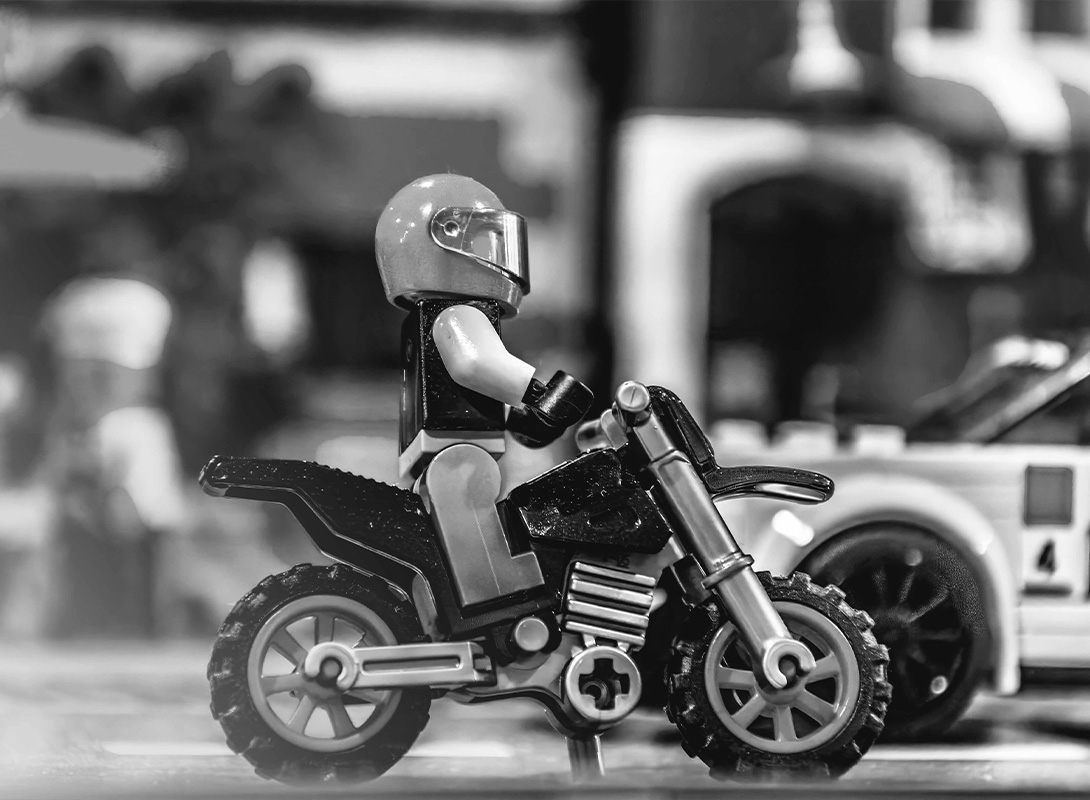
Why do we think that this is mostly reserved for children? Why do we leave this kind of thought experiment by the wayside, like our old action figures and dolls?

Actively working on your imaginative capacity, even as an adult, can work wonders for your anxiety levels. It’s the kind of thing that our tech-based distractions rob us of, but it’s an important way to slow things down, to take a breath, and to examine our experience with reality by escaping reality.

It’s paradoxical, but history shows just how crucial mythology and stories were in shaping our understanding of the world. Science has never been able to replace this fundamental desire to imagine ourselves as part of a play of total fiction. And my hunch is that this fiction was never really just fiction; it was a way to come to some collective understanding of the things we feel and live through (for more on this from a philosophical perspective, I’ll reference Gadamer’s Truth and Method).

So, to Return to My Point

I can’t tell you, “Do this and your fear will disappear.” But what I can say is that it might be valuable to introduce a bit of imagination and play in your life. Take time to wander, to visualize someone other than yourself living through the experiences you might feel anxious about.

Create that superhero who overcomes this fear, and maybe, just maybe, they’ll reveal the key to unlocking the strength you actually need to overcome it yourself.

Author's Note

This might all just be a pretext to talk about how nostalgic I am for my childhood, but I don’t know, things felt simpler then. I don’t remember stress and fear being as pervasive as they are now. I asked myself: Did I practice anything consistently back then that I don’t now? The idea of playtime immediately came to mind, though at first I didn’t think much of it. I started laughing and discounted its importance.

But when I sat down to write today, the thought returned as something of paramount importance, and I can’t tell whether that’s just me “wanting it to be important” or whether it actually possesses that quality inherently. My conclusion tends to favour the latter, but I’d be curious to hear your thoughts on the matter.

I’m fully expecting counterexamples arguing that imagination leads to naive and unreasonable expectations about the world, which aligns with how many Western philosophers have positioned imagination against reason. That kind of “sobering up” that tends to accompany adulthood has always bothered me, however, and I find that even the greatest minds (Einstein, for instance) have accepted the importance of imagination as a driving force, propelling their work and understanding forward.

Have something to say about the matter? Join the Discussion.

Want more tips like these to improve your rider's mindset? Subscribe to The Break-In, FortNine's weekly newsletter!

Related Articles

Blank

Losing a Fellow Rider: A Meditation on Grief

A personal reflection on grieving a fallen rider, and why these losses feel uniquely close to motorcyclists.

Blank

Motorcycle Philosophy: Stop Obsessing Over Control

A Dostoevsky-inspired meditation on motorcycling, overconfidence, and the illusion of control.

Blank

How to Overcome Insecurity as a Motorcyclist

Riding amplifies whatever you’re already sensitive about. Here's how honesty and outward praise can disarm the spiral.